
Artificial Intelligence : Important information you should know about AI
Artificial Intelligence systems can be designed to learn to adapt their behavior by analyzing how the environment is affected by their previous actions.




Artificial Intelligence systems can be designed to learn to adapt their behavior by analyzing how the environment is affected by their previous actions.

An artificial neural network, the vital part of a Deep Learning algorithm can be divided into three segments: 1) Input Layer, 2) Hidden Layer, 3) Output Layer.

Linear and logistic regression give analysts the possibility of grabbing meaningful information from data. Cost function, regression equations, and real-world examples have included in regression analysis explanation.

Machine Learning Models are classified as supervised learning, unsupervised learning, semi-supervised learning, and reinforcement learning.

Image to base64 conversion helps to transmit data over text-based protocols. For example, sending data as an email or store in textual formats like XML or JSON.

Object Recognition involves one or combination of more than one tasks of image classification, image localization, object detection and image segmentation.

Thanks to ChatGPT for their ChatGPT API using which one can create his own ChatBot Assistant in his App. Here are the steps required for the implementation.

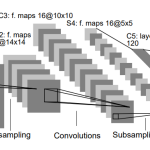
A Convolutional Neural Network is a class of ANN. It uses “Convolution” in place of “A general matrix multiplication” in at least one of their layers.

What is Docker? Software development is a lengthy, cumbersome, and a process of complex stages. The stages can be divided from the problem to the software idea (solution of the problem) to design of the software to the software development to the deployment of the software. Docker, being a container, makes software deployment error-prone to…

A field of AI that aims to interpret an inverse problem of describing a world of digital images by extracting meaningful information defines Computer Vision.